
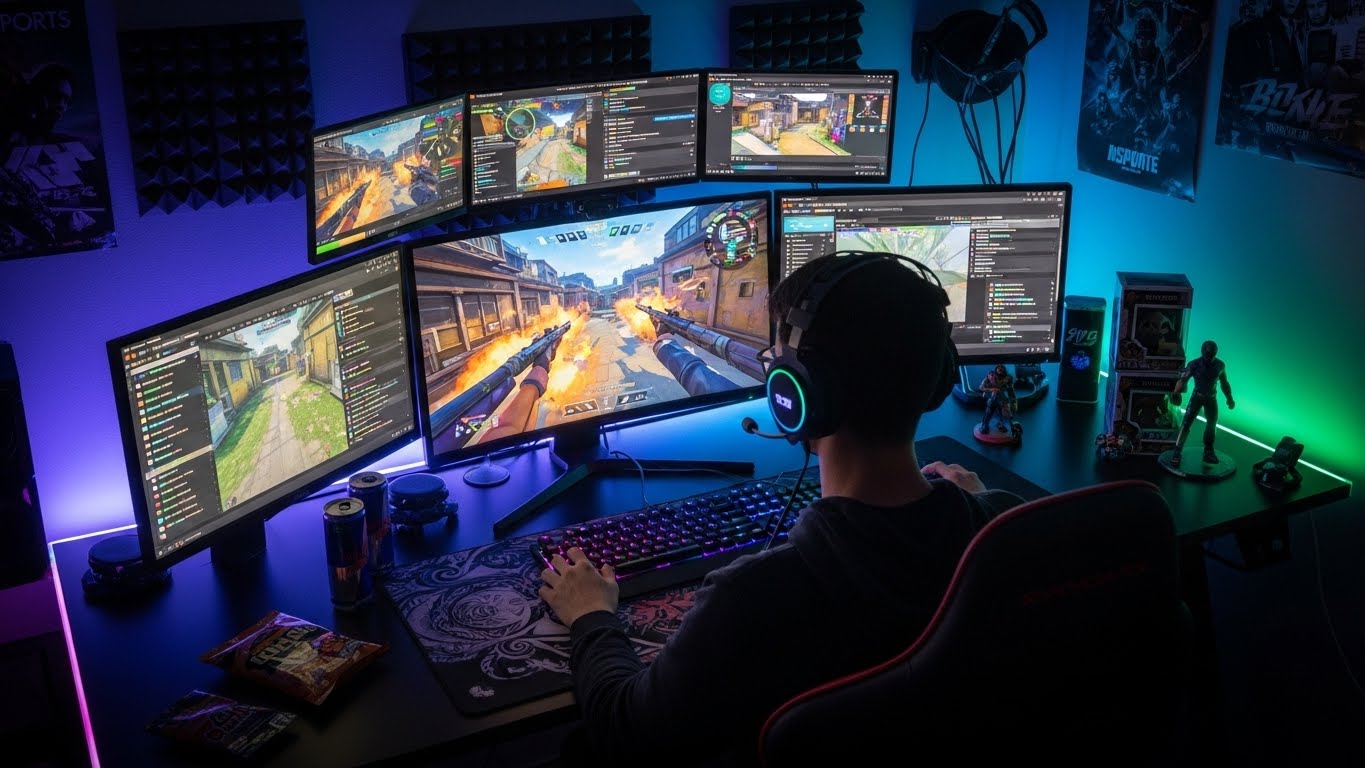
Gaming has transformed from a niche hobby into a global cultural phenomenon. What once began as simple pixelated experiences has evolved into immersive worlds where storytelling, graphics, and player interaction converge to create experiences that rival movies and literature. In this blog, we will dive deep into the modern gaming landscape, exploring technological advancements, cultural impact, emerging trends, and the future of this dynamic industry.
The Evolution of Gaming
The journey of gaming is a fascinating reflection of technological and cultural shifts. In the early 1970s, games like Pong introduced players to the concept of interactive entertainment. These early arcade experiences were simple yet captivating, relying on basic graphics and straightforward mechanics.
The 1980s and 1990s marked the rise of home consoles, with systems like the Nintendo Entertainment System and Sega Genesis bringing gaming into households. This era also saw the birth of iconic franchises that continue to influence the industry today. As computing power increased, developers began creating richer stories, more complex mechanics, and visually impressive worlds.
The 2000s introduced online gaming to the mainstream. Multiplayer experiences became accessible to a wider audience, connecting players across continents. Games such as World of Warcraft and Counter-Strike pioneered online communities, showing that gaming was not just about solitary play but also social interaction.
The Power of Storytelling in Games
Modern gaming is defined not just by graphics or mechanics but by storytelling. Games today offer narratives that rival novels and films, with complex characters, moral choices, and immersive worlds. Titles like The Last of Us and Red Dead Redemption provide experiences where players form emotional connections with characters, making decisions that impact outcomes in meaningful ways.
Interactive storytelling allows players to experience narratives in a personal, participatory way. Unlike passive media, video games put players at the center of the story, giving them agency and a sense of ownership over the unfolding events. This unique narrative power has turned games into a respected form of artistic expression.
Gaming Technology: Pushing the Limits
Technological advancements have been instrumental in shaping the gaming experience. High-definition graphics, ray tracing, and advanced physics engines create worlds that feel incredibly real. Virtual reality and augmented reality have further blurred the line between game and reality, offering immersive experiences where players can interact with digital environments in unprecedented ways.
Artificial intelligence plays a crucial role in enhancing gameplay. From adaptive enemy behavior to dynamic storytelling, AI makes games more responsive and engaging. Procedural generation allows developers to create vast, explorable worlds, as seen in games like No Man’s Sky, ensuring that every playthrough can feel unique.
Cloud gaming is another transformative technology, allowing players to stream games on demand without needing expensive hardware. This innovation is making high-quality gaming more accessible, breaking down barriers for people who cannot afford high-end consoles or gaming PCs.
The Cultural Impact of Gaming
Gaming is no longer just entertainment; it is a cultural force. Esports has transformed competitive gaming into a professional industry, with tournaments filling stadiums and prize pools reaching millions. Professional players have become celebrities, and gaming personalities influence millions through streaming platforms.
Games also shape culture through storytelling and representation. Modern games tackle social issues, diversity, and inclusion, allowing players to explore perspectives different from their own. Gaming communities form bonds that transcend geography, creating a shared culture where players learn, collaborate, and socialize.
Moreover, games influence other media. Movies, music, fashion, and even literature draw inspiration from gaming culture, demonstrating its growing impact on society at large. The way games combine narrative, art, and technology makes them uniquely positioned to influence cultural trends.
Mobile Gaming: Gaming on the Go
The rise of smartphones has made gaming more accessible than ever. Mobile gaming has become a dominant sector, attracting casual players and hardcore gamers alike. Titles like Clash of Clans, PUBG Mobile, and Genshin Impact have created massive global audiences, proving that gaming is not confined to consoles or PCs.
Mobile games have also introduced innovative monetization models. Free-to-play games with in-app purchases and seasonal content have created sustainable business models, allowing developers to continuously update and improve games while maintaining player engagement.
The accessibility of mobile gaming has democratized the industry, enabling anyone with a smartphone to participate in gaming culture, whether casually or competitively.
The Rise of Esports
Esports has grown from a niche community into a multi-billion-dollar industry. Competitive gaming tournaments now rival traditional sports in viewership and revenue. Games like League of Legends, Dota 2, and Fortnite attract millions of spectators worldwide, with professional players becoming household names.
Esports has also created career opportunities beyond playing, including streaming, coaching, content creation, and event management. Universities and schools have started offering esports programs and scholarships, recognizing the skill, strategy, and teamwork required in competitive gaming. This legitimization demonstrates that gaming can be a serious profession and not just a hobby.
Streaming and the Influence of Content Creators
Streaming platforms have transformed how games are consumed. Viewers can watch live gameplay, tutorials, and reviews, creating interactive experiences that combine entertainment and education. Popular content creators influence trends, introduce new games to audiences, and foster communities around shared interests.
Streaming also allows indie developers to gain visibility, giving smaller titles a chance to reach audiences they otherwise might not access. This democratization of content and exposure is reshaping the industry, empowering creators and players alike.
Virtual Reality and Immersive Experiences
Virtual reality has introduced new dimensions to gaming, creating fully immersive experiences. VR games allow players to step inside digital worlds, interact with environments, and engage in ways previously impossible. This technology is particularly impactful in simulation, adventure, and horror genres, where immersion amplifies excitement and emotional engagement.
Augmented reality blends the digital and physical worlds, creating experiences that overlay game elements onto reality. Games like Pokémon Go demonstrate the potential for AR to encourage physical activity, exploration, and social interaction, showing that gaming can extend beyond screens and into the real world.
Gaming as a Tool for Learning and Creativity
Beyond entertainment, games have educational and cognitive benefits. Many games enhance problem-solving, strategic thinking, and hand-eye coordination. Simulation games allow players to experiment with real-world scenarios safely, teaching lessons in management, resource allocation, and critical thinking.
Creative games, such as Minecraft, encourage players to design, build, and collaborate, fostering imagination and teamwork. Educational institutions have even begun integrating gaming elements into curriculums, recognizing the potential of games to engage students in interactive learning experiences.
The Future of Gaming
The future of gaming is incredibly promising. Advances in AI, VR, AR, cloud computing, and graphics technology will continue to push the boundaries of what games can achieve. Games will become increasingly immersive, socially connected, and personalized to individual players’ preferences.
As technology evolves, ethical and societal considerations will also become more critical. Issues like addiction, screen time management, diversity, and data privacy will need careful attention to ensure gaming continues to be a positive influence in society.
Artificial intelligence may also redefine game development, automating tasks and creating adaptive experiences tailored to each player. This could make gaming more inclusive, with experiences designed to meet diverse needs and abilities.
Conclusion
Gaming is more than a pastime; it is a cultural and technological revolution. From simple arcade games to fully immersive VR experiences, gaming has evolved into an art form, a competitive arena, and a social hub. The industry continues to innovate, pushing the limits of storytelling, graphics, and interactivity.
As gaming grows, it will continue to influence society, culture, and technology. It offers opportunities for entertainment, education, and professional careers, making it one of the most dynamic and impactful industries of our time. The world of gaming is constantly leveling up, and the future promises even more exciting, immersive, and transformative experiences.