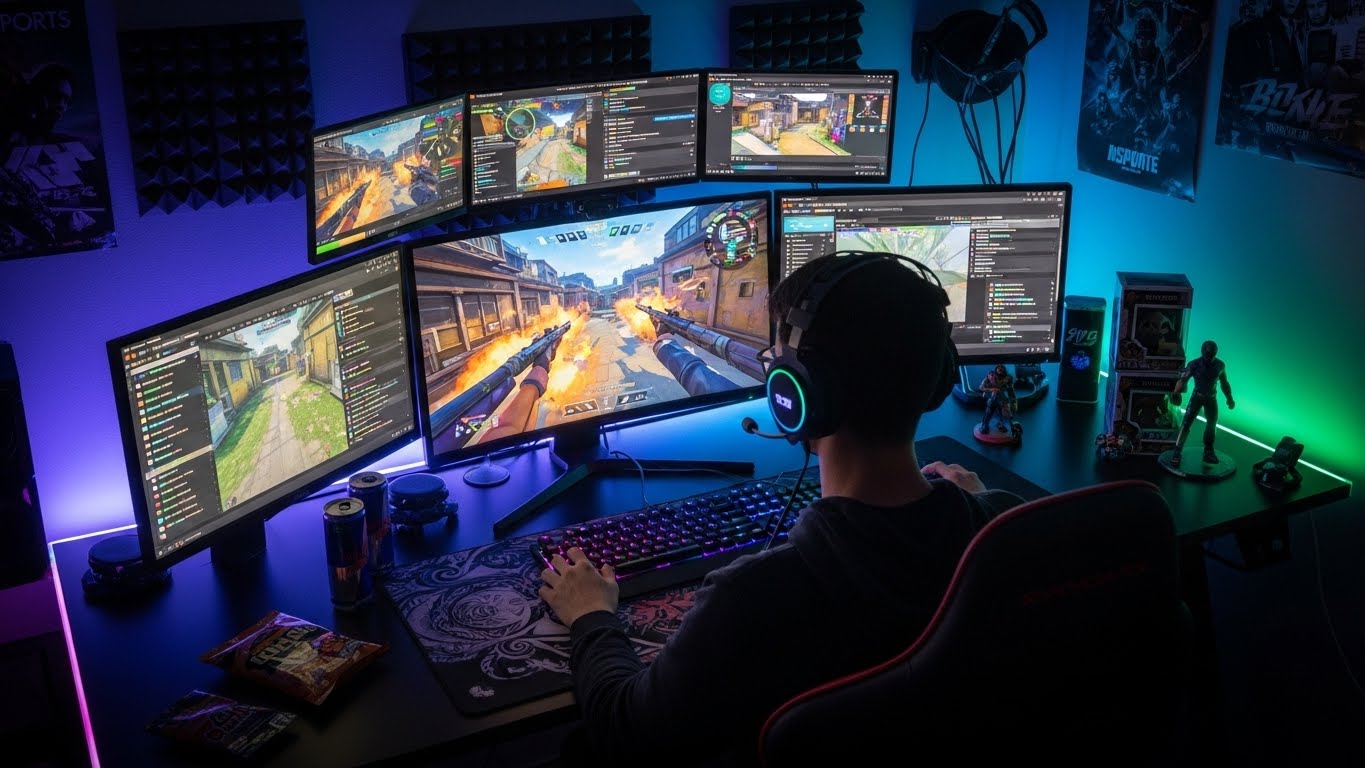

Introduction: Gaming Beyond Entertainment
Gaming has evolved far beyond a casual pastime. What started as simple pixelated screens and joystick controls has transformed into a multi-billion-dollar global industry, influencing culture, technology, education, and social interaction. Modern gaming spans a wide range of genres, platforms, and experiences, offering everything from immersive storytelling to competitive esports. Gaming is not only a form of entertainment but also a powerful medium that challenges cognitive skills, encourages creativity, and fosters communities. This blog explores the evolution, impact, and future of gaming while highlighting why it continues to captivate millions worldwide.
The Evolution of Gaming: From Arcades to Virtual Worlds
Gaming has come a long way since its inception. The earliest video games, such as Pong and Space Invaders, were simple in graphics and gameplay but revolutionary for their time. Arcade halls became social hubs, offering players a space to compete, socialize, and test their skills.
The 1980s and 1990s marked the rise of home consoles, bringing gaming into living rooms. The Nintendo Entertainment System, Sega Genesis, and later PlayStation and Xbox introduced players to more complex gameplay, storytelling, and interactive experiences. Personal computers also contributed to the evolution of gaming, with titles like Doom, Warcraft, and The Sims offering immersive worlds and multiplayer connectivity.
Today, gaming has reached unprecedented levels of sophistication. Open-world games, photorealistic graphics, and virtual reality experiences provide players with a sense of immersion unmatched in traditional media. Cloud gaming and mobile platforms have further democratized access, allowing anyone with a smartphone or internet connection to participate in the gaming ecosystem.
The Appeal of Gaming: Why People Play
Gaming appeals to people for multiple reasons. At its core, it provides a sense of achievement, challenge, and escapism. Games offer structured challenges that require strategic thinking, reflexes, and problem-solving skills. Players experience a sense of mastery when they overcome difficult levels, complete complex quests, or achieve high scores.
Beyond personal satisfaction, games allow exploration of imaginative worlds, often providing experiences that are impossible in real life. Role-playing games, for example, let players embody characters, make moral choices, and shape narratives, creating a sense of agency and immersion. Social interaction is another key aspect, as multiplayer games allow players to form friendships, collaborate on missions, or compete against one another.
Gaming and Social Interaction
Modern gaming is a social experience. Online multiplayer games and social platforms allow players to connect with friends and strangers worldwide. Cooperative gameplay encourages teamwork, leadership, and communication, while competitive play fosters strategic thinking and resilience.
Virtual communities built around gaming extend beyond gameplay. Players participate in forums, streaming communities, and fan events, discussing strategies, sharing content, and celebrating achievements. For many, gaming is not just about playing—it is a way to socialize, express themselves, and belong to a global community.
The Rise of Competitive Gaming and Esports
Esports has transformed gaming from a hobby into a professional career. Competitive gaming tournaments attract millions of viewers and offer substantial prize pools, rivaling traditional sports in scale and excitement. Professional players dedicate hours to practice, strategy, and teamwork, emphasizing that gaming requires discipline, focus, and skill.
Esports is not limited to players alone. Coaches, analysts, commentators, and content creators all contribute to a thriving ecosystem. The rise of esports has legitimized gaming as a professional pursuit, inspiring young players to pursue careers in competitive gaming, streaming, and game development.
Gaming as Storytelling
Video games have become one of the most immersive forms of storytelling. Unlike traditional media, games allow players to actively influence the narrative, making choices that affect outcomes, character relationships, and world-building. This interactivity enhances emotional engagement, as players experience consequences firsthand rather than passively observing them.
Genres such as role-playing games, adventure games, and narrative-driven titles excel at storytelling. Games like The Witcher, Red Dead Redemption, and The Legend of Zelda combine rich narratives, dynamic characters, and expansive worlds, offering experiences comparable to novels and films. Interactive storytelling in games encourages empathy, decision-making, and moral reasoning, demonstrating that gaming is a powerful medium for narrative expression.
The Technology Behind Gaming
Technology drives modern gaming, enabling immersive visuals, realistic physics, and complex AI interactions. Advanced graphics engines create lifelike environments, while physics engines simulate natural movements, collisions, and interactions. Artificial intelligence allows opponents and non-playable characters to react dynamically, enhancing gameplay and challenge.
Cloud gaming and streaming services are reshaping accessibility, allowing high-quality games to be played on devices with minimal hardware. Virtual reality and augmented reality offer fully immersive experiences, making players feel physically present in digital worlds. Technology continues to expand the possibilities of gaming, pushing the boundaries of what is possible in entertainment.
Mobile Gaming: Gaming in Your Pocket
Mobile gaming has revolutionized how people interact with games. Smartphones and tablets make gaming accessible anywhere, from commuting to waiting in line. Mobile games cater to a broad audience, offering casual puzzle games, competitive multiplayer experiences, and interactive narratives.
The convenience and accessibility of mobile gaming have attracted millions of casual players who may not own consoles or gaming PCs. Social features, leaderboards, and live events further enhance engagement, making mobile games a significant segment of the gaming industry.
Gaming and Mental Health
Gaming provides cognitive and emotional benefits when enjoyed responsibly. Strategy and puzzle games improve problem-solving skills, memory, and spatial reasoning. Action games enhance reflexes and hand-eye coordination. Cooperative games foster empathy, teamwork, and communication.
Beyond cognitive benefits, gaming offers stress relief and relaxation. Immersive experiences provide escapism, allowing players to recharge mentally. However, moderation is crucial, as excessive gaming can lead to social isolation, disrupted sleep, or decreased physical activity. Balanced gaming enhances mental health while contributing to personal growth.
Creativity and Gaming
Games provide a platform for creativity and self-expression. Sandbox and simulation games, such as Minecraft and The Sims, allow players to design worlds, characters, and stories, encouraging imagination and innovation. Creative communities also emerge around modding, fan art, and custom content, demonstrating how gaming fosters artistic expression.
The gaming industry itself is a hub of creativity, combining programming, music, art, storytelling, and design. Players and creators together form a collaborative ecosystem, making gaming both a medium of consumption and creation. Creativity is central to gaming, inspiring innovation both on and off the screen.
Streaming and Gaming Content Creation
Streaming has transformed gaming into a spectator sport and entertainment medium. Platforms allow players to broadcast gameplay, interact with audiences, and build personal brands. Streaming combines gameplay with personality, performance, and storytelling, creating engaging content for viewers worldwide.
Content creation has expanded career opportunities, enabling players to earn through sponsorships, partnerships, and fan support. Streamers influence gaming culture, popularizing games, strategies, and trends. The rise of streaming demonstrates how gaming has evolved from individual play to a shared and interactive experience.
Educational Value of Gaming
Gaming is increasingly recognized as an educational tool. Educational games teach coding, mathematics, problem-solving, and critical thinking. Gamification, the application of game mechanics in learning, motivates students and enhances knowledge retention.
Simulation and strategy games provide experiential learning, allowing players to practice real-world skills in virtual environments. Gaming demonstrates that entertainment and education are not mutually exclusive, offering dynamic, interactive ways to learn and grow.
The Future of Gaming
The future of gaming is both exciting and transformative. Virtual reality, augmented reality, cloud-based platforms, and artificial intelligence will redefine player experiences. Cross-platform play and global online communities will continue to expand accessibility and connectivity.
Gaming will continue to influence culture, technology, education, and entertainment. As developers innovate and players engage, gaming will remain a dynamic medium for creativity, social interaction, and personal development. The evolution of gaming reflects both technological progress and the human desire for challenge, exploration, and connection.
Conclusion: Gaming as a Cultural and Cognitive Force
Gaming has evolved from a simple pastime into a complex, multifaceted phenomenon. It entertains, educates, challenges, and connects people across the world. Whether through immersive storytelling, competitive esports, creative sandbox games, or casual mobile experiences, gaming shapes modern culture, inspires innovation, and fosters communities.
Beyond entertainment, gaming develops cognitive skills, encourages creativity, and supports mental well-being. It creates opportunities for professional growth, social interaction, and personal expression. As technology continues to advance, gaming will remain an essential part of modern life, influencing culture, connecting people, and providing endless possibilities for play, learning, and creativity.