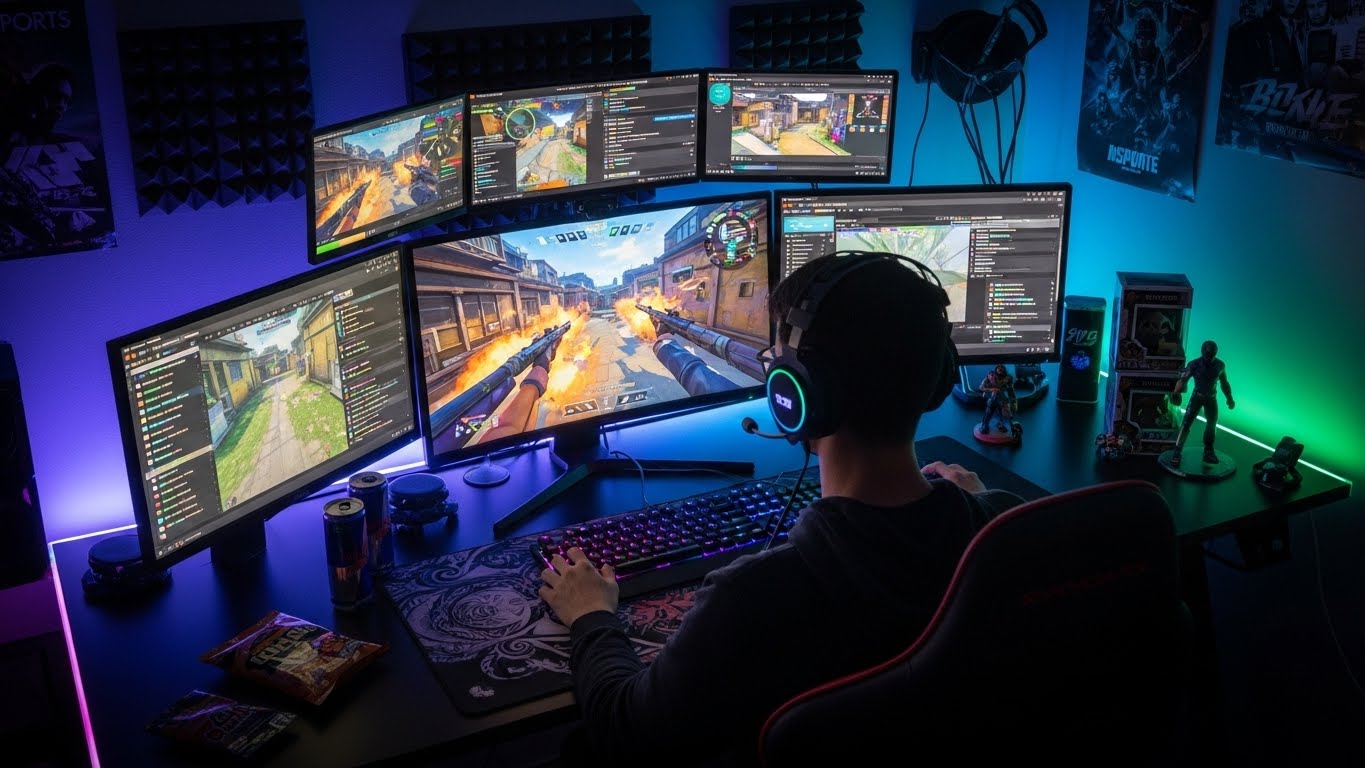

Gaming has become more than just a pastime; it has transformed into a universal language that connects people across borders, cultures, and backgrounds. What was once a niche hobby is now an integral part of the entertainment industry, generating billions of dollars and fostering vibrant, dynamic communities. Over the years, gaming has not only advanced technologically but has also shifted in how we view its role in society. From casual mobile gaming to professional esports, the world of gaming offers endless experiences, challenges, and rewards for every type of player.
In this blog post, we will explore the evolution of gaming, its cultural impact, the rise of various gaming genres, and what the future holds for this ever-expanding medium. Whether you are a lifelong gamer or someone just dipping their toes into this fascinating world, there’s no denying that gaming is here to stay.
A Brief History of Gaming
To understand how far gaming has come, it’s important to look back at its roots. The first video games were simple, often designed as experiments or educational tools rather than entertainment. One of the earliest examples was Spacewar!, created by Steve Russell in 1962 at MIT. It was a simple two-player space shooter that ran on mainframe computers. The 1970s saw the rise of arcade games like Pong and Asteroids, which became the first commercially successful video games.
However, it wasn’t until the 1980s that video gaming started to enter the mainstream. The launch of home consoles, like the Nintendo Entertainment System (NES) in 1985, allowed gamers to enjoy high-quality games at home. Titles like Super Mario Bros., The Legend of Zelda, and Metroid began to define the console gaming landscape, and for the first time, players had the ability to immerse themselves in expansive, story-driven worlds without leaving their living rooms.
The 1990s and 2000s saw the emergence of 3D graphics and the introduction of online multiplayer gaming. With the rise of powerful consoles like the Sony PlayStation and the Xbox, players were able to enjoy more complex and visually stunning experiences. Games like Final Fantasy VII, Metal Gear Solid, and The Elder Scrolls III: Morrowind pushed the boundaries of narrative storytelling, while the rise of multiplayer games like Quake and Counter-Strike paved the way for the competitive gaming scene.
The Growth of Gaming Genres
Over the decades, gaming has diversified into a wide range of genres, each offering a unique experience. From immersive open-world adventures to competitive multiplayer battles, the world of gaming now caters to almost every interest and skill level. Let’s explore some of the most popular and influential genres that have shaped the gaming landscape.
Role-Playing Games (RPGs)
One of the most beloved and enduring genres in gaming is the role-playing game (RPG). In RPGs, players assume the role of a character (or group of characters) and embark on a journey filled with quests, character development, and story-driven experiences. RPGs can range from traditional turn-based systems to more action-oriented, real-time combat.
The Elder Scrolls V: Skyrim, The Witcher 3: Wild Hunt, and Final Fantasy XIV are just a few examples of games that have defined the genre. RPGs are often noted for their deep narratives, world-building, and the sense of freedom they offer players. The decisions you make in these games often have a lasting impact on the world and the story, giving players a sense of agency and control.
One of the most iconic features of RPGs is the ability to level up characters, gain new abilities, and explore vast open worlds. The genre has evolved over time, incorporating elements from other genres such as action-adventure, strategy, and even survival games. With the rise of online multiplayer RPGs (MMORPGs), the genre has also become a social experience, allowing players to team up with others in their virtual journeys.
First-Person Shooters (FPS)
First-person shooters (FPS) are another hugely popular genre in the gaming world. These games focus on combat using firearms, where players experience the action from the perspective of the character they are controlling. FPS games are fast-paced and require quick reflexes, strategic thinking, and precision aiming.
Games like Call of Duty, Halo, and Overwatch have helped define the FPS genre, with an emphasis on multiplayer combat and competitive play. Counter-Strike: Global Offensive and Valorant have also become staples in the esports scene, where players compete in tournaments for cash prizes and prestige.
FPS games are known for their ability to immerse players in intense, action-packed scenarios. Whether you’re fighting off alien invaders in Halo or battling terrorists in Counter-Strike, these games offer thrilling experiences that test both your combat skills and your teamwork.
Puzzle and Strategy Games
Puzzle and strategy games, while not as action-oriented as RPGs or FPS games, have a devoted following and offer unique and intellectually stimulating experiences. These games focus on problem-solving, critical thinking, and long-term planning rather than fast reflexes or combat prowess.
Portal and Tetris are prime examples of puzzle games that challenge players to think creatively and solve intricate puzzles. Strategy games like Starcraft II, Civilization VI, and XCOM allow players to control armies, manage resources, and outsmart their opponents in complex, turn-based or real-time tactical environments.
These genres are ideal for players who prefer a slower, more thoughtful pace, where the focus is on strategic decision-making and careful planning. Whether you’re solving intricate puzzles or commanding an army, these games stimulate the mind and reward players for their ingenuity.
Simulation and Sandbox Games
Simulation and sandbox games provide players with a high degree of freedom and creativity. These games are often focused on creating or managing something, whether it’s a city, a farm, or an entire world. The Sims series, SimCity, and Minecraft are classic examples of this genre, allowing players to shape and mold their environment in unique ways.
In Minecraft, for instance, players can mine resources, build structures, and even survive in a blocky world filled with creatures. The game’s simplicity is one of its greatest strengths, as it gives players the freedom to explore and create at their own pace. Meanwhile, The Sims lets players design and control the lives of virtual people, experimenting with relationships, careers, and household management.
These games are ideal for players who enjoy exploring, creating, and experimenting in open-ended environments. They often lack a structured narrative, which allows players to invent their own stories and enjoy the process of creation.
Adventure and Narrative-Driven Games
Adventure games and narrative-driven experiences focus heavily on storytelling, often blending elements of exploration, puzzle-solving, and character interaction. These games take players on emotional journeys, allowing them to experience powerful narratives through the eyes of the protagonist.
The Last of Us, Uncharted, and Red Dead Redemption 2 are shining examples of games that emphasize storytelling. These games often feature deep characters, complex plots, and emotionally charged moments that resonate long after the game has ended.
For many players, the most rewarding aspect of these games is the ability to connect with the story and the characters on a personal level. The combination of beautiful visuals, captivating soundtracks, and expert writing creates an immersive experience that can be as emotionally impactful as any movie or book.
The Cultural Impact of Gaming
Gaming has evolved into a global phenomenon with far-reaching cultural implications. It has shaped how we interact with technology, how we view entertainment, and even how we connect with each other. For many people, gaming is no longer just a solitary activity; it is a social experience that brings people together.
One of the most significant cultural shifts has been the rise of online multiplayer gaming. Games like Fortnite, League of Legends, and World of Warcraft allow players to connect with others around the world in real-time. These games have created global communities where players form teams, build friendships, and share experiences. The rise of platforms like Twitch and YouTube has also allowed players to stream their gameplay and interact with their audiences, turning gaming into a social event that reaches millions of viewers.
Gaming has also influenced other areas of culture, including film, television, and music. Video game franchises like The Witcher, Tomb Raider, and Halo have been adapted into successful TV shows and movies, demonstrating the growing crossover between gaming and mainstream entertainment. Additionally, video game soundtracks have become highly regarded in the music industry, with composers like Nobuo Uematsu (Final Fantasy) and Austin Wintory (Journey) receiving widespread recognition for their work.
The Future of Gaming
The future of gaming is brighter than ever. As technology continues to advance, the possibilities for new gaming experiences are limitless. Virtual reality (VR) and augmented reality (AR) are two of the most exciting frontiers in gaming. With VR, players can immerse themselves fully in 3D worlds, interacting with their surroundings in ways that were once impossible. Games like Half-Life: Alyx and Beat Saber have shown the potential of VR, offering a truly immersive experience.
Cloud gaming is also set to revolutionize the industry. With services like Google Stadia and Xbox Cloud Gaming, players will be able to stream high-quality games to almost any device, bypassing the need for expensive hardware. This could democratize gaming, allowing anyone with an internet connection to access the latest titles.
Artificial intelligence (AI) is another area where gaming is set to make huge strides. AI-driven characters and enemies are becoming more intelligent, creating dynamic, reactive environments. In the future, we may see games where the world and characters evolve based on player choices and behaviors, making each playthrough unique.